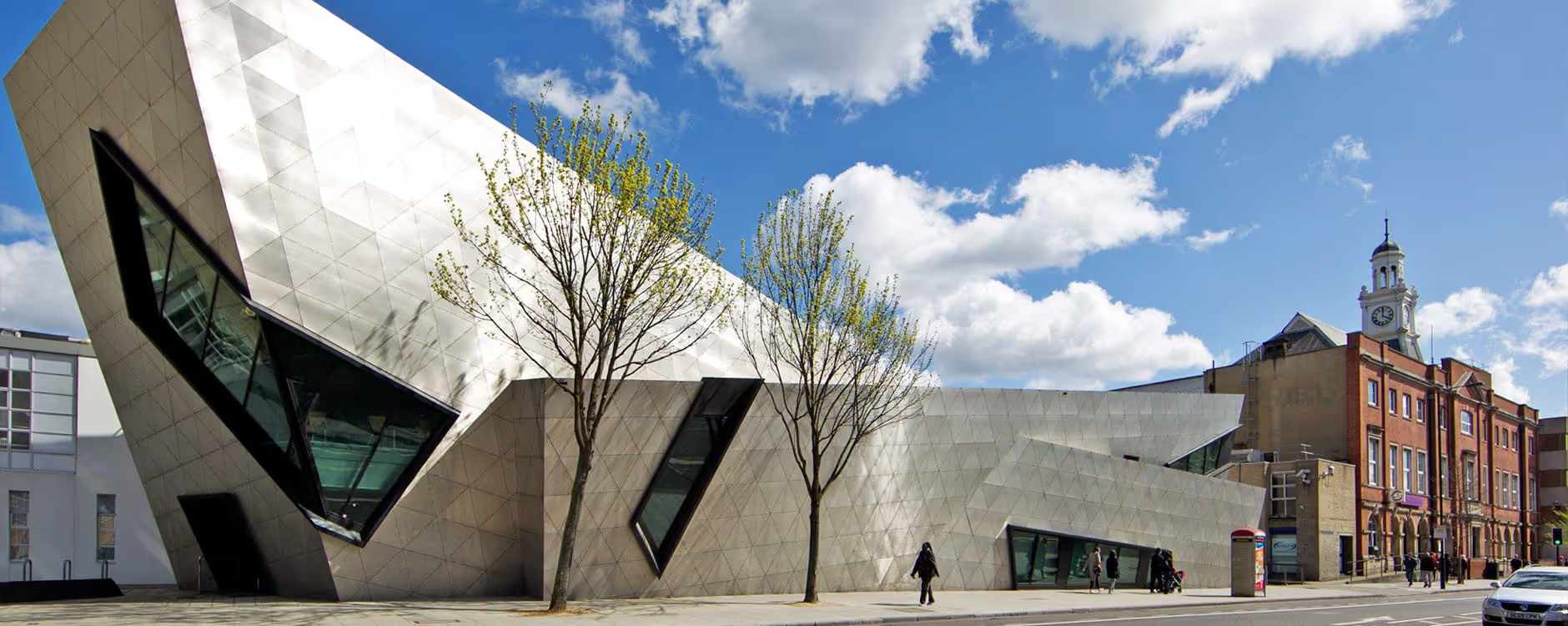
Architectural photography involves capturing the design and structure of buildings and other man-made structures. It requires an understanding of both the artistic and technical aspects of photography to represent architectural elements accurately and attractively.
Important elements of architectural photography include:
- Perspective and Composition: Use lines and shapes to guide the viewer’s eye. Experiment with angles and perspectives to highlight architectural features and create dynamic compositions.
- Lighting: Consider how natural and artificial light affects the building’s appearance. Use different times of day to capture varying lighting conditions and shadows.
- Camera Settings: Use a wide-angle lens to capture the entire structure and avoid distortion. Adjust aperture and shutter speed to achieve sharp, well-exposed images.
- Symmetry and Lines: Pay attention to symmetry and straight lines to ensure accurate representation of the building’s design. Use a tilt-shift lens to correct perspective distortion.
- Post-Processing: Correct any lens distortion and adjust exposure and contrast to enhance the details and clarity of the architecture. Ensure that edits maintain the integrity of the building’s design.
- Research and preparation: study the building’s design and history to capture its essence. Plan your shoot to align with the best lighting conditions and angles.
By mastering these techniques, photographers can effectively capture the beauty and intricacy of architectural structures, showcasing their design and significance.